Willpower is limited and unreliable. Belonging to a community that expects to see you builds consistency far better than personal motivation alone, because that's how most people actually stick with a habit over time: with other people, not by gritting their teeth.
You've probably heard it before: "If you really wanted it, you'd just show up." It sounds tough and motivating, but it quietly blames you every time life gets messy, work runs late, or your energy tanks. The truth is, motivation naturally rises and falls. That doesn't make you weak; it makes you human. Relying on sheer willpower is like relying on caffeine alone to get through every day: it works for a while, then you crash. What doesn't crash so easily is belonging. When you're part of a real fitness community in Dallas that expects to see you, remembers your name, and notices when you're missing, showing up stops being a solo battle. It becomes something you do with people, not just for yourself.
Why Willpower Is a Terrible Fitness Strategy
Most people who keep starting and stopping gym routines don't have a character flaw; they have a strategy problem. The usual strategy is: "I'll just push myself harder next week." But mental energy for self-control runs low. After a day of work, errands and responsibilities, asking yourself to "just be more disciplined" is like asking your phone to run on 1% battery all evening. Eventually it shuts down, and your workout plans do too. When you're tired, stressed or overwhelmed, willpower is usually the first thing to go. That's why so many well-intentioned workout plans fade after a few weeks. It's not that you don't care. It's that no one can white-knuckle their way to long-term consistency. You need a structure that supports you when your motivation dips.
The Science of Social Commitment
Here's where community changes everything. Psychologists have a name for one piece of this, social facilitation: many of us try harder when other people are around, especially when we share a goal. In simple terms, training with others often leads to more effort and better attendance than going it alone. You finish the last reps, you push a little more, and you keep coming back because others are in it with you. A supportive strength training community doesn't just cheer; it quietly shapes your habits. You're more likely to show up because your workout isn't an isolated chore. It's part of a shared rhythm. This is the heart of group fitness motivation: you feel pulled forward by the energy in the room, not pushed by guilt or self-criticism. Over time, that pull is what helps you build a habit that sticks.
How Community Creates Consistency
One of the biggest questions we hear is how to stay consistent with workouts when life keeps interrupting. The answer isn't more self-criticism; it's gentle accountability in fitness. In a strong fitness community, people notice when you're there, and when you're not. Not in a shaming way, but in a "Hey, we missed you Tuesday. You good?" kind of way. That simple human check-in can be the difference between disappearing for three months and coming back after a tough week. Consistency grows when you know someone will notice your effort. You're no longer just skipping a workout; you're missing a chance to see people who support you, ask about your day, and genuinely care that you feel stronger. Over time, this turns workouts from a task on your to-do list into a meaningful part of your week: a place where you're expected, welcomed and encouraged.
A quiet truth: A lot of people don't quit training because they hate lifting. They quit because they feel alone in it. Community helps fix that.
What Makes a Fitness Community Actually Work
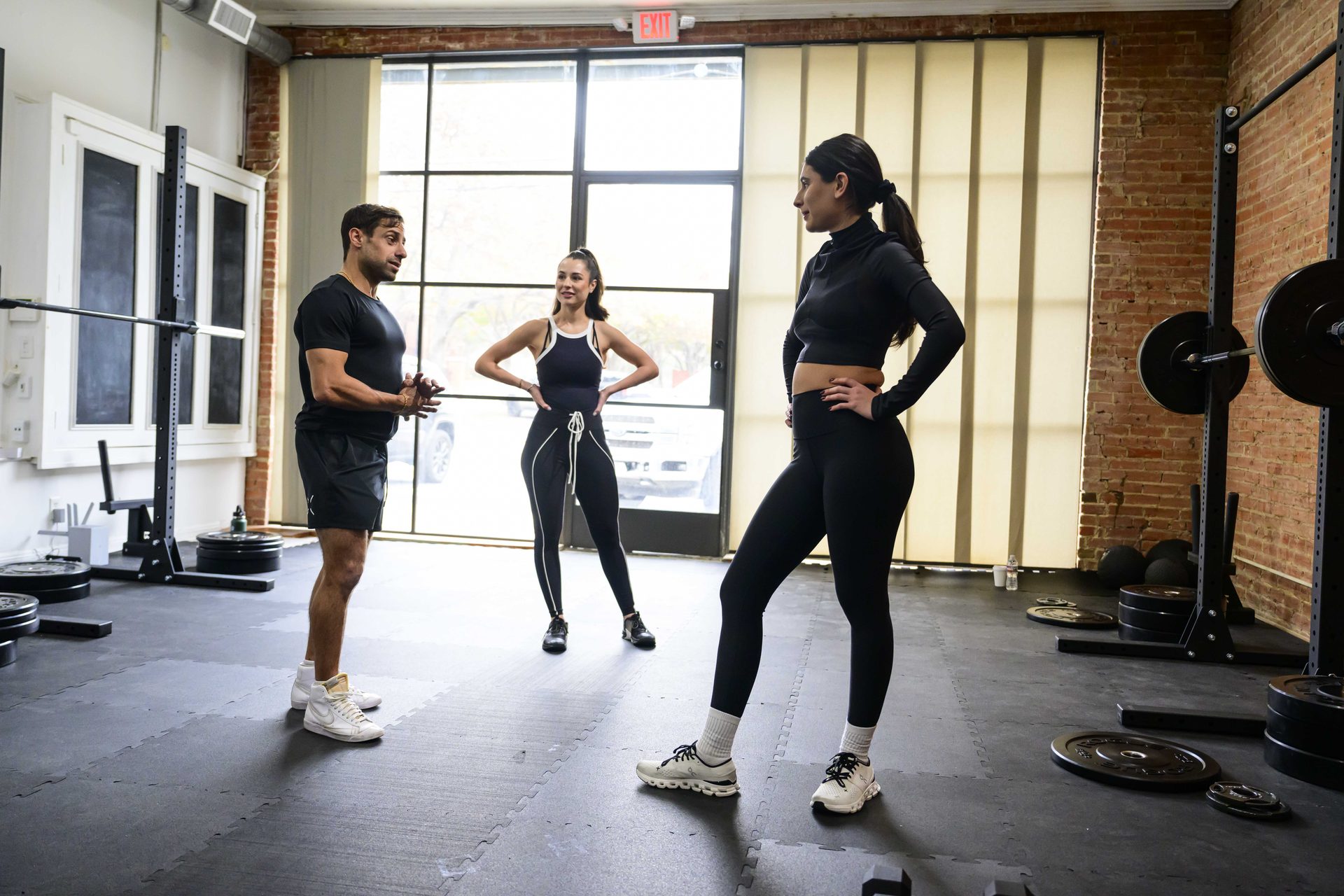
Not every gym community feels the same. A space can be crowded and still feel lonely. For a fitness community in Dallas to truly work, it needs to be small enough and personal enough that people genuinely know you. That means coaches greet you by name, notice when you hit a personal record, and remember when you've been working around a sore shoulder or a stressful week. It means other people in class recognize your face, celebrate your PRs, and share that little nod across the room that says, "We're in this together." A real strength training community doesn't revolve around selfies or competition; it revolves around shared progress. When someone adds five pounds to their squat, people clap. When you come back after time away, no one rolls their eyes. They say, "Glad you're here." Those small moments are what turn a gym into a place you actually want to keep coming back to.
The Barbell Club Community: What It Actually Looks Like
At The Barbell Club, 3112 Swiss Ave in Old East Dallas, our classes are intentionally small and strength-focused, capped at 12 people. This isn't a giant, anonymous warehouse where you disappear in the back row. It's a strength gym where the coaches know your name, your numbers and your goals. In class, people notice when you're there, celebrate each other's PRs, and cheer each other on during hard sets. When someone grinds through the last rep of a heavy set or adds weight to their deadlift, the room knows it. Because classes are capped, coaches can walk the floor, teach technique, correct your form, help you pick your weights, and still ask, "How are you feeling today?" This is what group fitness motivation looks like in real life: shared effort, shared celebration, and a sense that you're part of something bigger than your own workout. New to lifting? Start with our beginner's guide to safe lifting form.
Accountability Without Judgment
We believe in accountability in fitness, but not the harsh, shaming kind that makes you dread walking through the door. Good accountability looks like this: a coach who notices when you've been consistent and celebrates it. People who are glad to see you when you come back after a week or two away, instead of calling you out. Training partners who cheer each other on without comparing bodies or numbers. Life happens: kids get sick, work gets busy, energy dips. You'll never be judged for being human. Instead, the focus is on helping you come back, not making you feel bad for stepping away. That kind of accountability feels more like support than pressure. It's the difference between "You'd better show up" and "We'd love to see you." And that kinder approach is often what helps people stay consistent for the long haul. If you've been away for a while, our guide to coming back to lifting can help.
Conclusion: Belonging Beats Willpower Every Time
If you've been wondering how to stay consistent with workouts, it might be time to stop asking, "What's wrong with my willpower?" and start asking, "Who's in my corner?" A supportive fitness community can do what raw motivation can't: carry you through the weeks when life is heavy, energy is low, and motivation is quiet. At The Barbell Club on Swiss Ave, the goal is simple: a room where people feel seen, supported and genuinely welcomed, so they keep showing up and start to enjoy the process. Results vary, but consistency is where they come from. You don't have to do this alone, and you don't have to become a different kind of person to belong here. You just have to take the first step through the door.
Come meet the community that'll make you want to show up.
Frequently Asked Questions
What if I'm introverted or shy?
That's fine. You're never forced to be the center of attention or make small talk if you don't want to. You can focus on your lifts, listen to coaching, and get to know people at your own pace. Belonging here doesn't mean being loud; it means being welcomed as you are.
Will people judge me if I'm new or out of shape?
No. Everyone in the room started somewhere, and plenty of people come in nervous, unsure, or coming back after a long break. We celebrate effort, not perfection. Coaches modify movements to your level, and the unspoken rule is simple: we all started somewhere, and starting is something to be proud of.
Do I have to be social for this to work?
You don't have to be chatty or outgoing to benefit from group fitness motivation. Simply being in the room, lifting alongside others, hearing the encouragement and following the same training plan, is enough to feel the difference. Some people make close friends; others just enjoy familiar faces and a friendly nod. Both are valid ways to belong.
How big is the community and the classes?
Small on purpose. Small Group Strength Classes are capped at 12 people so coaches can give you real attention instead of shouting cues across a crowded room. That's what lets The Barbell Club feel like a neighborhood gym, not a faceless fitness factory.
Will lifting heavy make me bulky or is this for all levels?
It's for all levels, from people who are brand new to lifting to people who have trained for years. You start where you are and progress with sets, reps and small jumps in weight. Lifting builds strength, confidence and muscle, but "bulky" isn't the default, and heavy is relative. Your coach will help you set goals that match how you want to feel and move.
Book a Free Strength Class
Come lift with us on Swiss Ave. You get a real one hour class with a coach watching your reps, then about 10 minutes to talk through your goals and get a recommendation for what fits you. No pressure, just a plan.