No, lifting will not make women bulky. Women have far less testosterone than men, which makes large muscle gain very hard to get without a deliberate plan to chase it. Here is what strength training actually does for women, and why Dallas women can pick up heavy weights with confidence.
Walk into most commercial gyms and you will still see it: rows of men around the squat racks and women clustered near the treadmills. Plenty of women skip strength training, not because it is not for them, but because they have been given bad advice and fearful messaging for decades. “Stay light.” “Tone, don’t bulk.” “Avoid heavy weights.” None of this is rooted in real physiology. Train with a plan and good coaching and you can get stronger, more capable and more confident than cardio alone usually gets you. This article breaks down the basics, busts the myths, and shows what strength training for women in Dallas can look like when it is done right.
The Hormone Reality (Estrogen vs Testosterone: What It Means for Muscle Building)
When women ask, “Will lifting make me bulky?” what they are really asking about is hormones. Muscle growth is heavily influenced by testosterone, a hormone men have far more of than women. That is a big difference, and it matters. Even women who lift seriously, eat to gain, and train with precision typically add muscle slowly and moderately, not explosively. Most women’s primary sex hormone is estrogen, which plays a role in bone and heart health but does not drive large muscle gain the way testosterone can. In other words, your body is not set up to pack on thick slabs of muscle just because you picked up a barbell three times a week.
This is why elite female strength athletes, who train with heavy weights, eat a lot and program their lifting meticulously, still look athletic rather than “accidentally huge.” Building that level of muscle is a deliberate, multi-year project, not something that happens by mistake from a few hours of lifting each week. For the average woman balancing work, family, and life in Dallas, strength training is far more likely to leave you looking firmer and more athletic than “bulky.”
Hormones are personal, and they change across your life. If you have a specific hormone or health question, talk to your doctor. This article is general training information, not medical advice.
Myth Busted: Why Women Will Not Get Bulky From Lifting
Let’s take apart the bulky fear with straight facts. To gain visible, large muscle mass, three things must line up consistently: high training volume with heavy loads, a sustained calorie surplus (eating more than you burn), and a hormonal profile that supports fast muscle growth. Most women who start lifting are not eating in a big surplus, and plenty are under-fueling. They also train 2 to 4 days per week, not twice a day like professional athletes. The usual result is muscle definition and strength, not sudden size.
Another key point: when women start lifting, they often notice their clothes fit differently even if the scale barely moves. Muscle takes up less space than the same weight of fat, so your shape can change while the scale stays similar or even edges up slightly. So when you wonder, “Will lifting make me bulky?” understand this: without a deliberate plan to overeat and maximize muscle gain, your body tends toward a firmer, more athletic version of your current shape, not a bodybuilder physique. Results vary from person to person.
What Strength Training Actually Does for Women
When women and heavy weights come together in the right program, the benefits reach far beyond looks. Here is what strength training can do:
Better body composition: Lifting helps you keep and build lean muscle. Clothes can fit better, posture can improve, and “toned” becomes a real outcome of training instead of a vague hope.
Stronger bones: Safe, progressive loading through squats, deadlifts, and presses is widely recommended for bone health, which matters more for women as they age.
More muscle to work with: Muscle is active tissue. Building some helps with everyday energy and makes managing your weight less about extreme diets or endless cardio.
Overall health: Regular strength training is good for your general health, and some women find it helps how they feel through their cycle or through perimenopause. Everyone is different, so talk to your doctor about anything specific to your hormones or health.
Confidence that carries into life: There is a unique power in watching the barbell go from impossible to easy. Getting stronger in the gym has a way of making you feel more capable at work, at home, and in your own body.
In short, strength training for women is not about shrinking yourself. It is about expanding what you can do: climbing stairs without getting winded, carrying groceries in one trip, picking up your kids without hesitation, and moving through Dallas life with real, earned strength.
Progressive Overload for Women (Works the Same Way, at Appropriate Weights)
The principle that drives all effective strength training, male or female, is progressive overload. That simply means gradually asking your body to do a little more over time: more weight, more reps, better control, or harder variations. For women, the process is identical; the only difference is starting point and pace. At The Barbell Club, we meet you where you are. Heavy is relative. If your “heavy” today is a 15-pound dumbbell, that is valid. If it is a 185-pound deadlift, that is valid too.
The way to do it is simple and structured: log your lifts, repeat key movements week to week, and add small, manageable increases as your body adapts. Our workouts are built on sets and reps rather than racing against a timer, and coaches help you pick weights and correct your form as you go. That is how you build real strength without burnout. You are not thrown into random workouts or pressured to match someone else’s numbers. You move forward at a pace that respects your body and your life while still challenging you enough to make measurable progress.
Female-Specific Considerations (Cycle, Recovery, Relative Strength)
Female strength training does not mean pink dumbbells. It means paying attention to how your own body responds to training. Your menstrual cycle can affect energy, coordination, and recovery, and many women notice they feel stronger at some points in the month and more tired or sensitive at others, especially around their period. That is normal, and it is something a good coach will work with, not against. If your cycle brings pain or symptoms that worry you, talk to your doctor.
Recovery matters too. Sleep, stress, and nutrition play huge roles in how well you bounce back from heavy sessions, so pair your lifting with enough protein, water and a realistic training frequency. Relative strength is another useful lens. A man and a woman may lift different absolute loads, but comparing strength to your own body weight is a much fairer measure, and many women are far more capable than they think. Your numbers deserve to be celebrated on your terms, not compared to anyone else’s.
Why The Barbell Club Is a Great Fit for Women Starting Out
If you are a woman in Dallas curious about lifting but nervous about stepping into a typical gym, The Barbell Club is worth a look. Located at 3112 Swiss Ave, Dallas, TX 75204, in Old East Dallas, we are a strength-focused, small-group gym built around small classes, real coaching, and a strong sense of community. Our classes are capped at 12 people, so you are never lost in a crowd or left guessing what to do next.
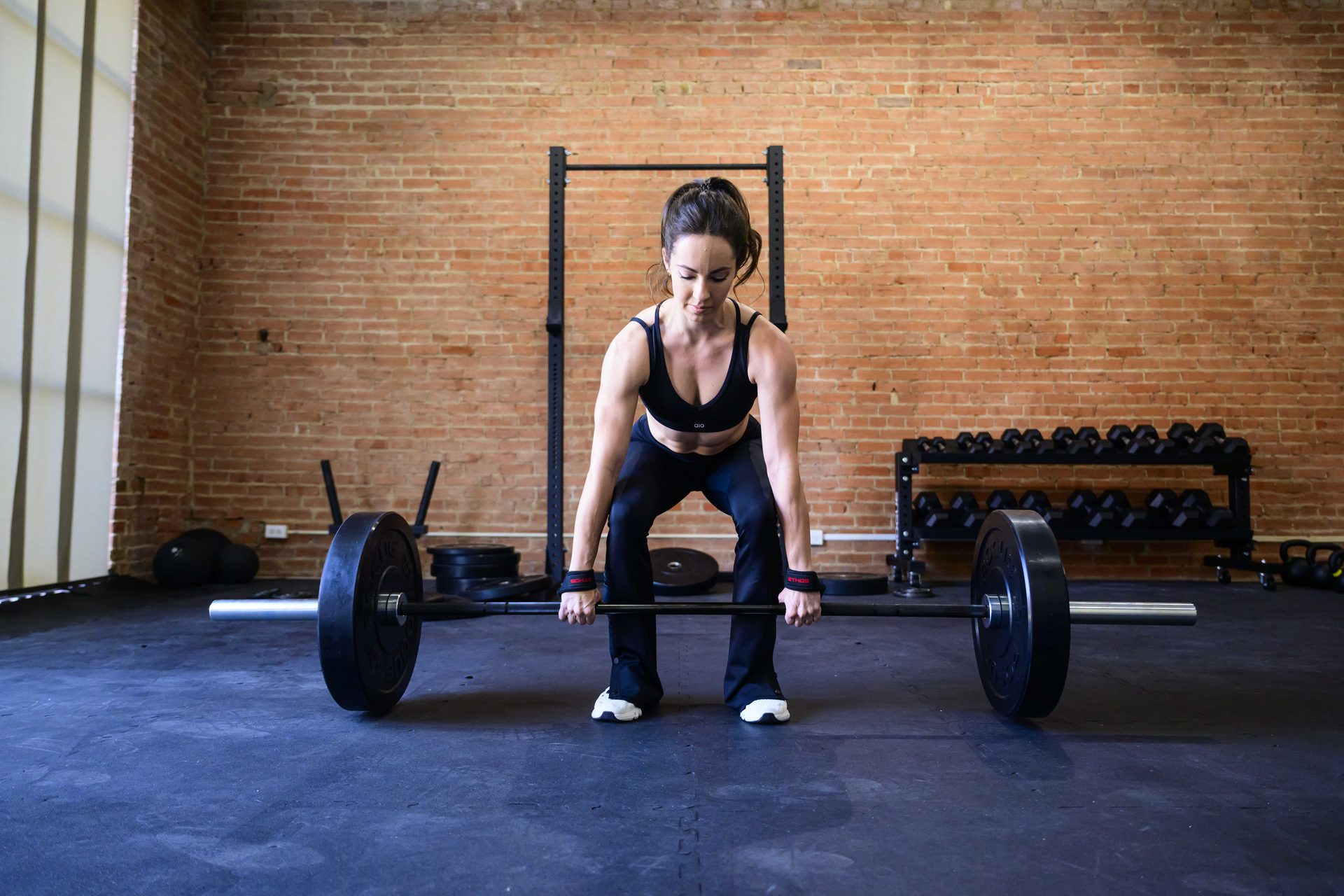
Our coaches teach you how to squat, deadlift, press, and row with safe, efficient technique. They correct form, help you choose your weights, modify movements when you need it, and celebrate your wins. We train both men and women, beginners and experienced lifters, and the goal is the same for everyone: to feel strong, not small. If you want to see it for yourself, a Free Strength Class is the easiest way in.
Ready to Get Stronger? Join The Barbell Club in Dallas
Strength training for women is not a trend. It is one of the most effective ways to support your health, your strength and your confidence for life. The myths about bulk and “too much muscle” have kept women out of the weight room for far too long. In reality, women and heavy weights belong together, especially when those weights are lifted in a supportive, coached, small-group setting like The Barbell Club on Swiss Ave.
If you are a woman in Dallas who is curious about lifting but nervous to start, this is your invitation. Come see what lifting can really feel like: clear coaching, smart programming, and a community that cheers when you add that next five pounds to the bar. Meet the coaches and see how strong and capable you can be when you train the way your body was built to move.
Frequently Asked Questions
Will I get bulky from lifting at The Barbell Club?
Very unlikely. Our training is built on progressive overload to build strength and lean muscle, not size for its own sake. Without a large calorie surplus and advanced training volume, most women become firmer and more defined, not bulky. Results vary.
How heavy should I lift as a beginner?
Start with a weight that feels challenging but controllable for 6 to 10 reps with solid form. That might be just the empty barbell or a lighter training bar. Our coaches help you pick weights so you learn what “appropriately heavy” feels like without being pushed beyond your limits.
Is strength training safe during my cycle?
For most women, lifting during their period is fine. Some feel completely normal, while others prefer to reduce intensity or volume on harder days. Listen to your body and tell your coach, who can modify the session so you stay consistent without forcing anything. If you have pain or symptoms that concern you, talk to your doctor.
Am I too old to start lifting weights?
No. Strength training is widely recommended for keeping independence, bone health, and energy as you age. Start with loads and progressions that fit you, build from there, and check with your doctor first if you have health conditions.
I’ve never lifted before and feel intimidated. Can I still join?
Yes. Training should feel approachable no matter your experience level. With classes capped at 12, coaches can teach you the fundamentals step by step and make that first session feel manageable.
Book a Free Strength Class
Try a real one hour class with a coach watching your lifts, then spend about 10 minutes talking through your goals. We will recommend the option that fits you, with no pressure to sign up.