A lot of fitness advice is wrong. These 7 strength training myths keep people frustrated, sore, and stuck. The truth: you don't need daily workouts, crazy soreness, or a cabinet full of supplements. Here's what well-established training principles actually say about getting stronger.
If you've bounced around Dallas gyms, scrolled fitness TikTok, or overheard locker-room "experts," you've heard a lot of confident advice about lifting. The problem? Much of it is flat-out wrong. These strength training myths don't just sound annoying. They quietly steal your progress and your motivation.
Beginners get hit the hardest. You're trying to do the right thing, but internet "rules" and outdated bro-science make strength training feel confusing, extreme, or just not for you. So you spin your wheels, wondering why you're showing up but not really changing how you look, feel, or perform.
At The Barbell Club on Swiss Ave in Dallas, we coach people through these myths all the time. Let's walk through seven of the biggest ones keeping you stuck, and the simple strength training facts that actually work.
Myth 1: You Need to Train 5 to 6 Days a Week
One of the first questions beginners ask is, "Do I need to train every day?" Short answer: no. Unless you're a professional athlete, training 5 to 6 days a week is usually unnecessary and often counterproductive. More days doesn't automatically equal more progress. It often just means more fatigue and more missed sessions when life gets busy.
Total weekly work and consistency matter more than how many days you split that work into. Three focused, well-designed strength sessions will beat five random, rushed workouts every time. Your muscles grow when you recover, not while you're grinding through your eighth exercise of the day.
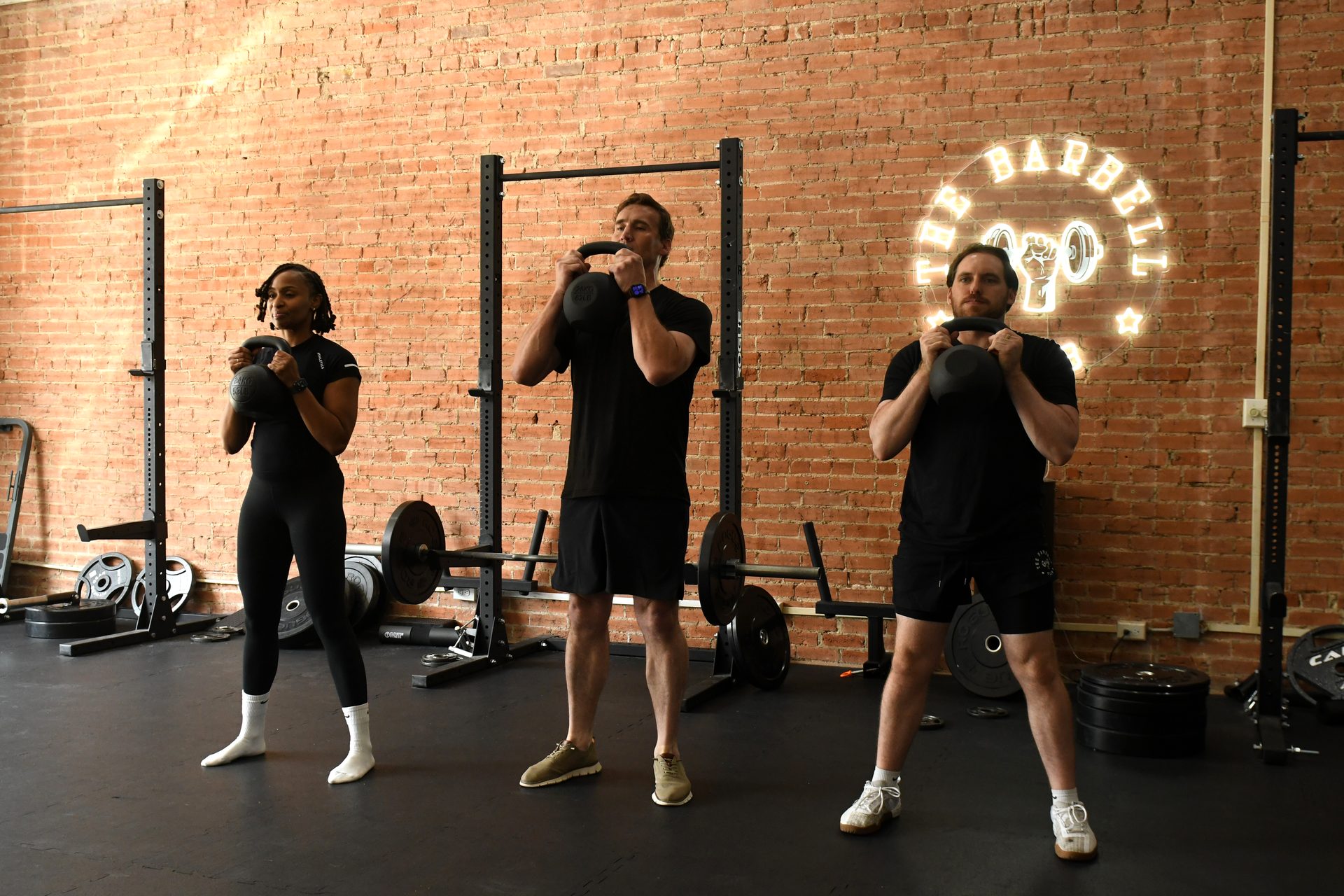
That's the idea behind our small group strength classes. The programming is handled; you just show up, work hard for an hour, and then get on with your life in Dallas, with energy left for work, family, and, yes, tacos.
Myth 2: Heavy Weights Will Make Women Bulky
This is one of the most persistent myths about women and weightlifting: touch a barbell and you'll wake up "bulky" overnight. If that were true, every guy in every Dallas gym would be huge by now. Muscle doesn't appear by accident. It takes time, food, and a lot of progressive training.
Here's the simple version. Men generally have much higher testosterone levels, which strongly drive muscle growth, and women generally have far lower levels. Lifting heavy weights helps women build lean muscle, support bone health, and improve body composition, which usually means a more defined look, not sudden mass. If you have questions about your own hormones, that's a conversation for your doctor.
The real risk isn't getting too big. It's avoiding strength training altogether and missing out on stronger muscles, better everyday strength, and confidence under the bar. Heavy is relative, and the right weight for you is the one you can move well and build on. For more, read strength training for women: myths and facts.
Myth 3: Soreness Means You Had a Good Workout
We've all done it: wake up barely able to walk down the stairs and think, "Wow, that must have been a great workout." That post-workout soreness has a name: DOMS (delayed onset muscle soreness). It's common when you start a new program or try new exercises, but it's not a reliable measure of progress.
Here's the fact: you can get stronger and build muscle with minimal soreness, especially once your body adapts. DOMS mostly tells you that you did something different or more than usual, not that you did something better. Chasing soreness often leads to random workouts, poor recovery, and skipped sessions because you're too wrecked to move. Feeling wrecked after a workout doesn't equal progress.
A better sign of a good workout: you're a little tired, you felt challenged, your technique stayed solid, and you're ready to train again in a day or two. That's the sweet spot we aim for in our small group classes on Swiss Ave: enough challenge to get stronger, not enough to derail the rest of your week.
Myth 4: No Pain, No Gain
This one really needs to retire. There's a big difference between productive discomfort and actual pain. Strength training should feel challenging: your muscles burn, your heart rate goes up, the last few reps take focus. But sharp, stabbing, or joint pain is your body's way of saying, "Stop doing that."
Training through real pain is how minor issues turn into long layoffs. Smart training respects your current capacity and gradually expands it. That's why coaching matters: a good coach can modify an exercise, change the load, or adjust your form so you keep progressing without beating your body up.
Coach's tip: Muscle burn and effort are normal. Joint pain, pinching, or anything that feels "wrong" is a red flag. Stop the set, tell your coach, and if the pain sticks around, talk to your doctor.
Myth 5: Cardio and Lifting Do Not Mix
You'll hear this one from hardcore lifters: "Cardio kills gains." Reality check: doing cardio and strength work in the same week is common, and you can build strength and improve conditioning at the same time if you plan them sensibly and recover well.
What actually hurts progress is doing too much of everything with no plan. Running long distances daily while trying to hit heavy squats four times a week? Yes, that will clash. But a few well-timed conditioning sessions, such as short intervals, brisk walks, or moderate cardio, can support your lifting by improving your work capacity and recovery.
Our classes are built on sets and reps rather than racing a timer, so the lifting stays the priority. Add some walking or easy cardio on your off days and you don't have to choose between lifting and feeling athletic. You can have both, even with a busy Dallas schedule.
Myth 6: You Must Lift Heavy to See Results
One of the biggest myths beginners run into is the idea that if you're not lifting near-maximal weights, you're wasting your time. In reality, the key driver of strength and muscle gain is progressive overload: gradually asking your body to do a little more over time, at a weight you can control with good form.
Yes, heavier weights are useful, but "heavy" is relative. For a beginner, a controlled goblet squat with a 20-pound dumbbell might be plenty. You can progress by adding weight, adding reps, improving technique, or slowing the tempo. All of those are valid ways to overload your muscles safely.
The goal is not to chase the biggest number in the room. It's to challenge your current level and move that line forward. In our small groups, you'll see people lifting different weights on the same exercise, because coaches help each person pick the weight that's right for them.
Myth 7: You Need Supplements to Build Muscle
Walk into any big-box gym in Dallas and you'll see shelves of powders, pills, and potions promising fast gains. Here's the unexciting truth: you do not need supplements to build muscle or get stronger. They can be convenient, but they're optional, and they don't fix a lousy training plan or poor sleep.
Whole food nutrition comes first. If you're eating enough protein, getting a mix of carbs and fats, staying hydrated, and sleeping like an adult, you've already covered most of what matters. A basic protein powder can help you hit your daily protein target, and creatine is one of the most studied supplements out there. Talk to your doctor before you start any supplement. Beyond that, most products are expensive noise.
Before you spend more on supplements, make sure you're consistently showing up to train, eating real food, and managing stress. Those aren't flashy, but they're what actually move the needle.
What Actually Works: Progressive Overload, Coaching, and Consistency
Strip away all the noise and you're left with a few simple strength training facts that work for almost everyone:
Progressive overload: Gradually increase weight, reps, or difficulty over time so your body keeps adapting.
Good technique: Lifting well beats lifting ugly. Proper form keeps you safer and targets the right muscles.
Coaching and accountability: A coach removes guesswork, fixes form, and keeps you honest when motivation dips.
Consistency: Three solid workouts a week for six months will beat two "perfect" weeks followed by a month off.
That's the philosophy behind The Barbell Club at 3112 Swiss Ave. The programming is planned, coaches teach technique and correct your form, and classes are capped at 12, so you're known by name, not lost in a sea of treadmills. You don't have to obsess over every detail. You just need a clear plan and the support to follow it.
Ready to Drop the Myths and Get Real Results in Dallas?
You don't need daily workouts, brutal soreness, or a supplement shelf that looks like a science experiment. You need a clear plan, honest coaching, and a community that makes showing up easier. That's what we built at The Barbell Club on Swiss Ave in Dallas.
If you're tired of strength training myths and ready for straightforward training that fits your real life, we'd love to show you how different lifting can feel: small group coaching, smart programming, and a supportive crew that cheers your PRs, without the hype. Results vary from person to person, but the plan is always built on what you can do today.
Frequently Asked Questions
Do I need to train every day to see results?
No. Two to four strength sessions per week are enough for most people, especially beginners. What matters is progressive overload and consistency, not a perfect streak on your workout app.
Can beginners start with barbells, or should I "get in shape" first?
You don't need to earn the right to touch a barbell. With proper coaching, beginners can start from day one using light loads and simple variations, then build up over time.
Is lifting bad for my joints?
Poorly performed lifting can be hard on your joints. Well-coached strength training builds stronger muscles and tendons that support them. Technique and the right load make the real difference. If you have a joint condition or ongoing pain, talk to your doctor before you start.
Do I have to give up my favorite foods to get stronger?
No. Strength training doesn't require a perfect diet, just a reasonable one. Focus on enough protein, mostly whole foods, and portions that support your goals. There's room for Dallas brunch and date-night dinners in a smart plan.
I'm not "a gym person." Is strength training still for me?
It can be. Strength training myths often make it seem like lifting is only for young, super-fit people. In reality, it's one of the best tools for staying capable as you age. Small group coaching makes it approachable, even if big gyms aren't your scene.
Book a Free Strength Class
Trade internet myths for real coaching and real barbells. Your Free Strength Class is a one hour class with a coach, then about 10 minutes to talk about your goals and get a recommendation. No pressure.